
Nicolás Trujillo
Economics Student
About
College student in the eighth semester of the Faculty of Economics and Finance at the Universidad del Pacífico, oriented towards achieving goals and excelling in complex and high-pressure situations. Interested in finance, investment banking, business consulting, and data analysis and management.

Economics Student & Real State Financial Planning Intern.
I excel in complex and high-pressure situations and am driven by continuous learning. With strong analytical skills and a focus on achieving objectives, I have developed successful organizational and teamwork abilities.
- Birthday: 26 Nov 2002
- Phone: +51 980 080 285
- City: Lima, Peru
- Age: 21
- Degree: Economics
- Email: nicolastrujillopalacios@hotmail.com
Skills
Advanced proficiency in database management using Excel. Expertise in MS Office. Experienced in utilizing Stata, RStudio, Python, Matlab, VBA, and EViews for statistical analysis, modeling, and data visualization.
Resume
Education
Universidad del Pacífico
2020 - 2025
Faculty of Economics and Finance
Professional Experience
Grupo Lar
May 2024 - Present
Real State Financial Planning Intern
- Provide Support in Management Control Execution
- Analyze Annual Budget and Forecast Process.
- Provide Support in Real Estate Business Valuation
- Provide Support in Financial Closing Preparation (administrative expenses, financial statements analysis)
Relevant Coursework
Causal Inference and Machine Learning
2024
Universidad del Pacifico
Causal inference in economic analysis with Machine Learning (ML). Gained expertise in statistical inference tools using ML and AI (lasso, random forest, deep neural networks) to infer causal parameters and quantify uncertainty.R, Python, and Julia, alongside version control with Git and GitHub.
Advanced Excel Training Course: Macros
2023
Essential concepts such as control structures, variables, procedures, functions, and the use of forms and objects, enabling participants to automate tasks and develop sophisticated Excel applications.
CFA L1 Preparation Course
2024
Tandem Finance
CFA Level I Preparation Course. The course covers all essential CFA L1 topics including Ethical and Professional Standards, Quantitative Methods, Economics, Financial Statement Analysis, Corporate Issuers, Equity Investments, Fixed Income, Derivatives, Alternative Investments, and Portfolio Management and Wealth Planning.
Portfolio
I have participated in several projects primarily focused on machine learning and causal inference, utilizing RStudio, Python, and Julia.
Theoretical Proofs and Practical Applications
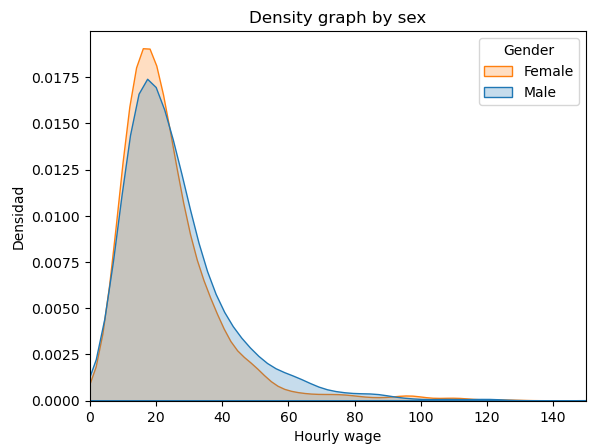
Proving econometric theorems, replicating data analyses, and implementing regression techniques. We will prove the Frisch-Waugh-Lovell theorem, replicate econometric analyses on wage data using Python, R, and Julia, and manually implement k-fold cross-validation for Lasso Regression to select optimal parameters and evaluate model performance.
Potential Outcomes and RCTs
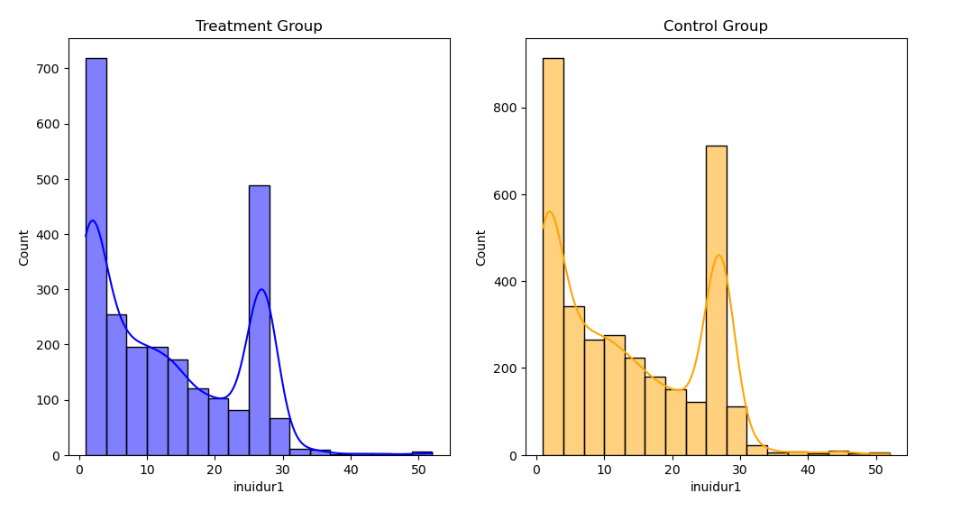
Understanding multicollinearity in regression analysis and its implications. We will create a matrix to illustrate multicollinearity, replicate RCT data analysis using various regression techniques in Python, R, and Julia, and evaluate the impact of control variables on treatment effects. We will also replicate causal models with personalized parameters and apply them to real-world scenarios.
Bootstraping - Scripts in (R, Python and Julia) and Causal Forest
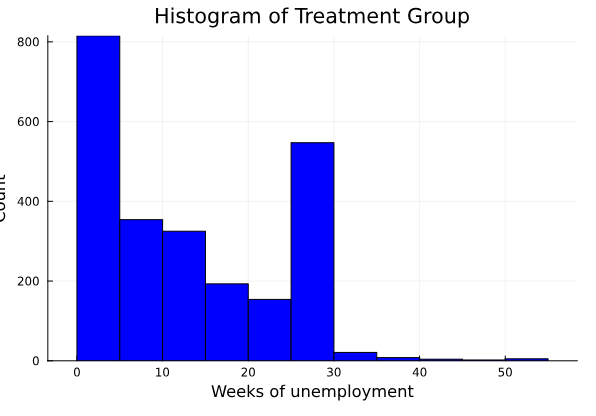
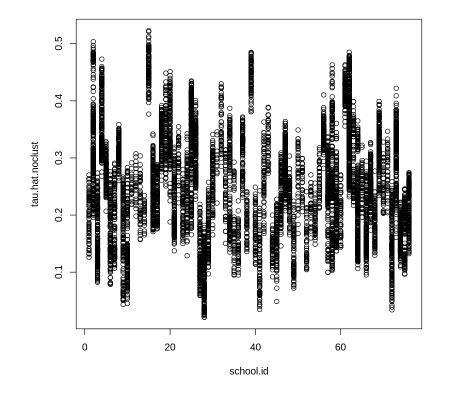
Bootstrap methods to compute standard errors for treatment, female, and black variables using specified regression equations. Detailed steps and code modifications are documented, and results are presented in a concise table format. Additionally, we replicate Athey and Wager's Causal Forest methodology in R and Python, analyzing tree construction, estimating ATE, and exploring heterogeneity by school.
Replication, Data analysis and Non-Linear Methods DML
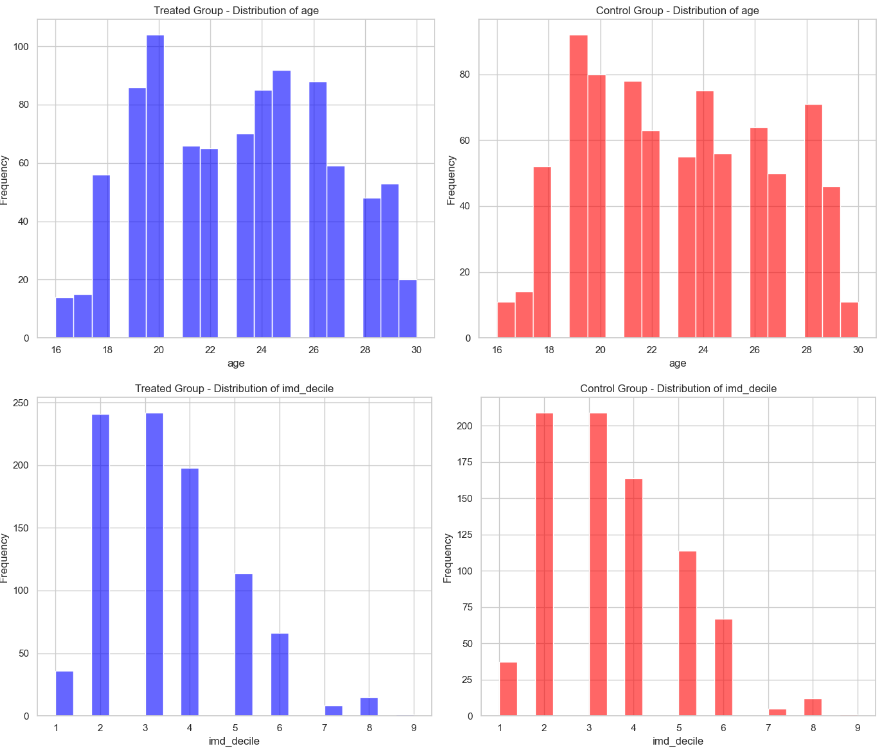
Analyzing the findings from the Wilson et al. (2017) paper using Python, R, and Julia. We start by describing key variables with tables and graphs, distinguishing between treated and control groups. We then perform linear regression analyses, including Y ~ T, Y ~ T + X, and Double Lasso estimation. Non-linear methods like Double Machine Learning (DML) using Lasso, Regression Trees, Boosting Trees, and Regression Forest are applied to model Y ~ T + X.